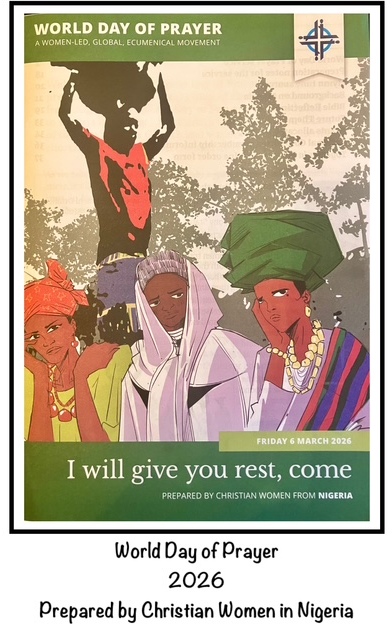
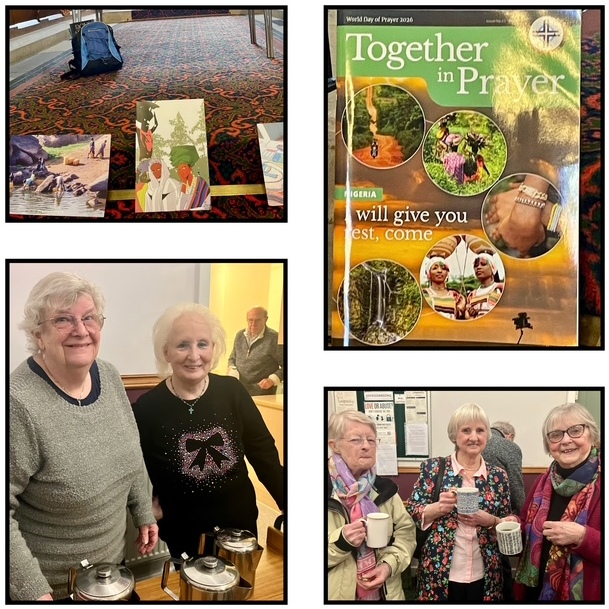
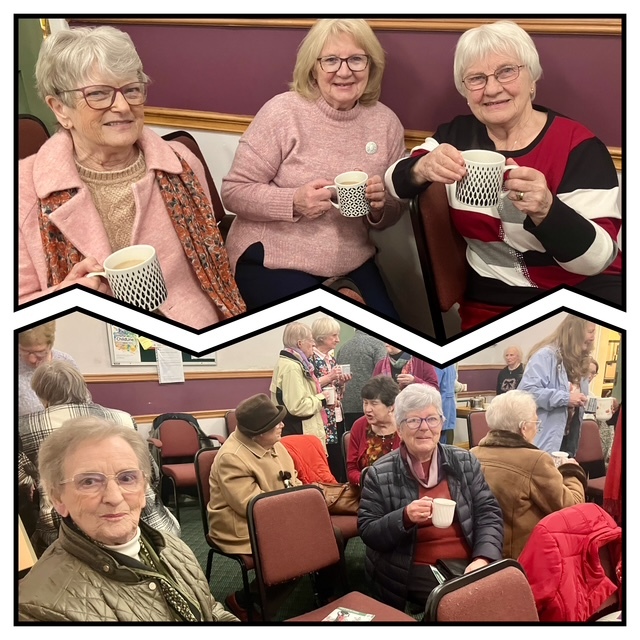
The 2026 World Day of Prayer service was prepared by an ecumenical group of Christian women from Nigeria and celebrated locally by men and women from the Over Wyre villages, all of whom were keen to join a great wave of prayer encircling the globe. The prayers began in Samoa and ended, 146 countries later, in American Samoa. All were praying with and for the country and people of Nigeria.
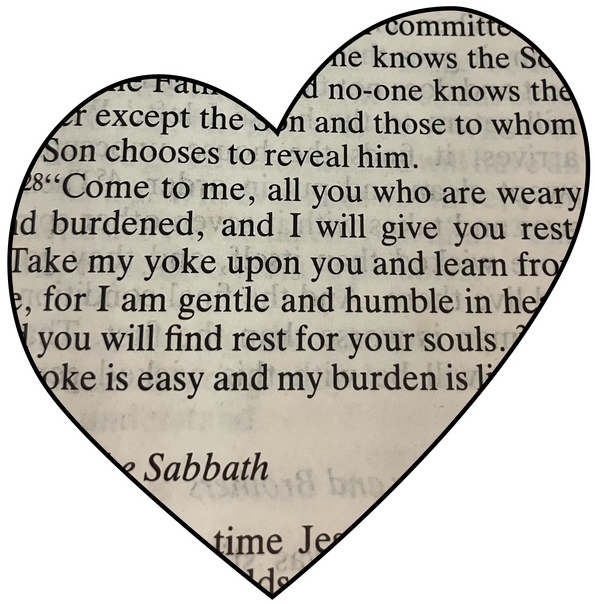
Taking inspiration for this year’s theme from Matthew 11:28-30, ‘I will give you rest, come”, the Nigerian women said, “Trusting God, who bears our burdens, we become one body in Christ, united in prayer and yoked together in love through Jesus’ message of fresh hope and rest.”
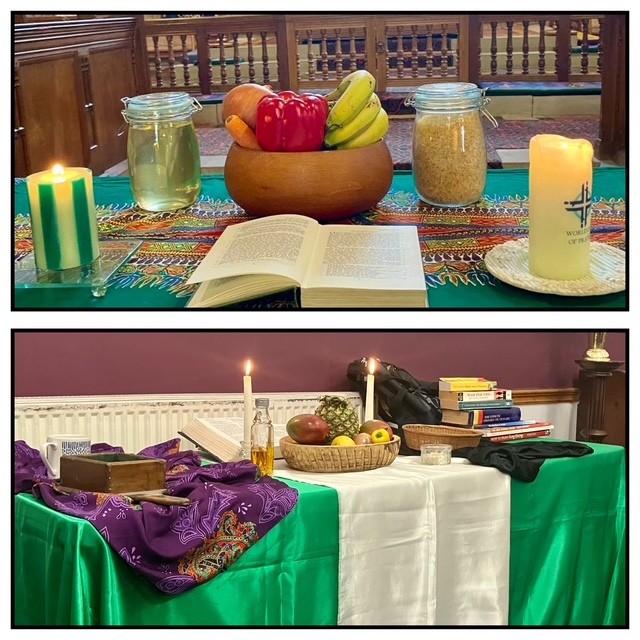
The Nigerian Christian women described how they felt weighed down by shame or low self-esteem, marginalisation, religious persecution, poverty and the despair this brings. These feelings were explored in the stories featured during the service and represented symbolically through a series of artefacts placed on and around the altar.
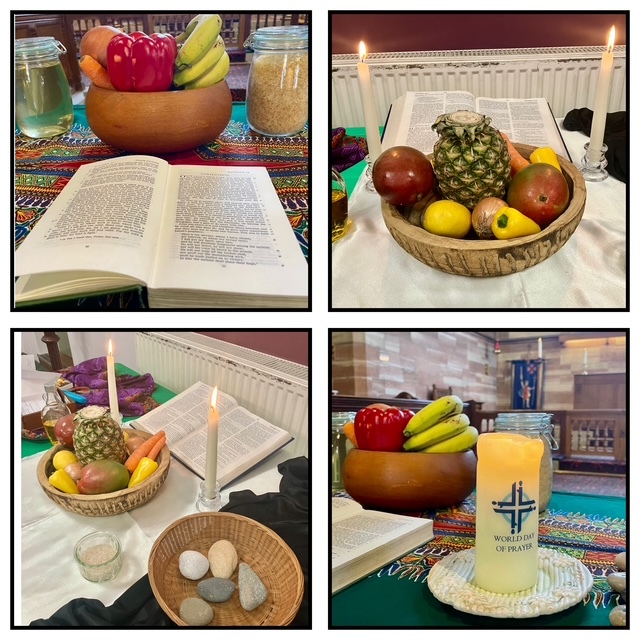
Colourful African fabric embodied the rich tapestry of Nigerian cultures, telling a story of heritage and identity. The green and white colours of the National flag symbolised unity in diversity and fresh hope for the future. A black mourning cloth represented the burden of marginalisation, described in the story of Beatice, shared with the congregation during the service. A stack of schoolbooks and a backpack was indicative of the burden of religious persecution faced by some children such as Jato, whose story was also shared. Grains of rice were symbolic of the interconnected burdens of poverty and despair, highlighting the relationship between economic hardship and mental health struggles, as described in the story of Blessing, a woman living in Lagos. Stones placed on the altar represented the heavy burdens carried by people, such as poverty, oppression and justice. Cooking oil in a glass jar was symbolic of Nigeria’s complex history with crude oil, reflecting both potential for prosperity and the weight of global exploitation. Lit candles shed light in the darkness behind the artefacts, representing hope in the face of despair. Finally, a calabash bowl filled with fruits and vegetables common to Nigeria was symbolic of God’s provision of sustenance and nourishment amidst the struggles of life. Together, all these symbols, replicated the world over in similar worship spaces, provided a powerful, visual representation of burdens, weighing people down.
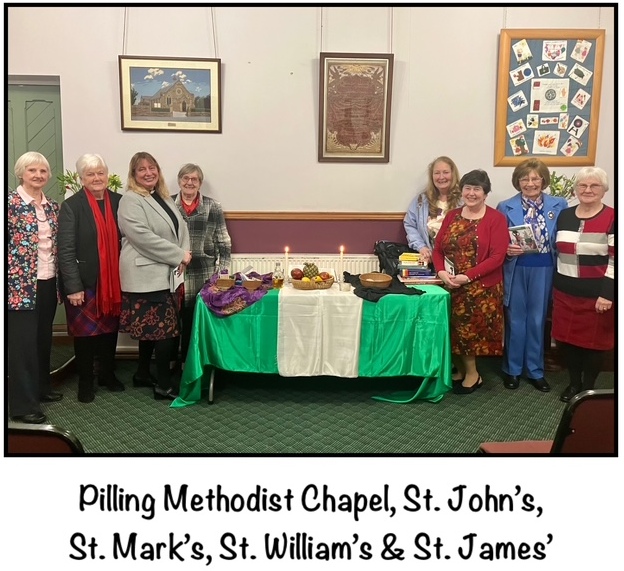
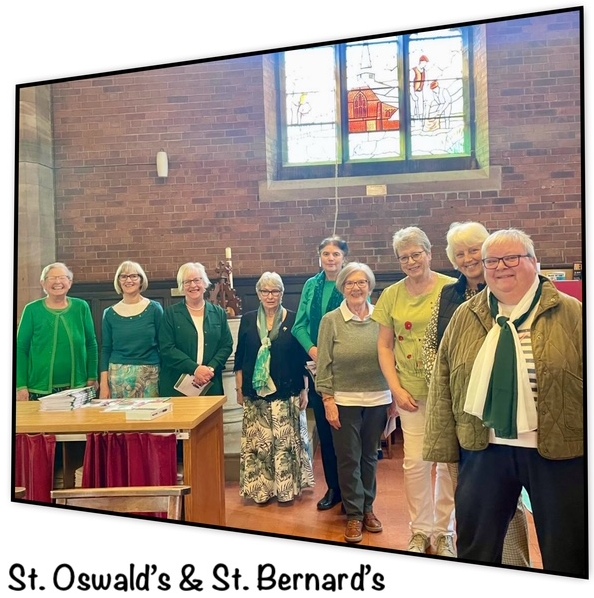
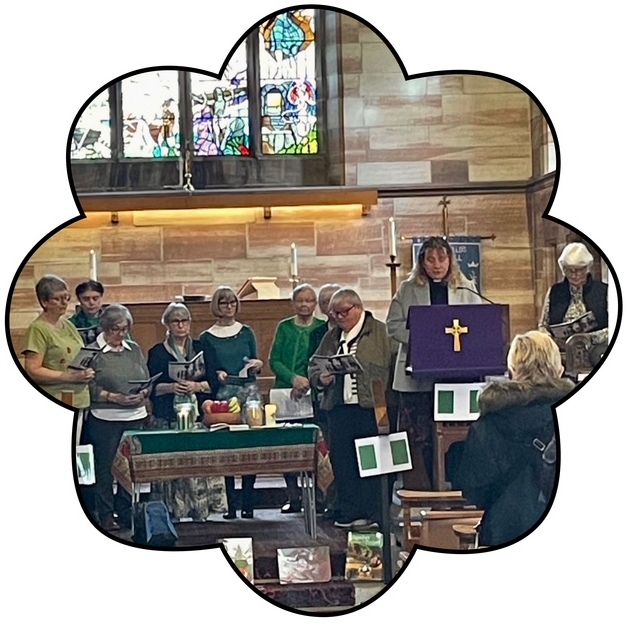
St. Oswald’s church (Preesall) joined with St. Bernard’s church (Knott End) for an afternoon service and Pilling Methodist church joined with St. John’s church (Pilling), St. Mark’s (Eagland Hill), St. William’s (Pilling) and St. James’ (Stalmine) for an evening celebration. Both services were respectful and reflective in nature and both congregations stood united with the Christian women who had designed the programme.
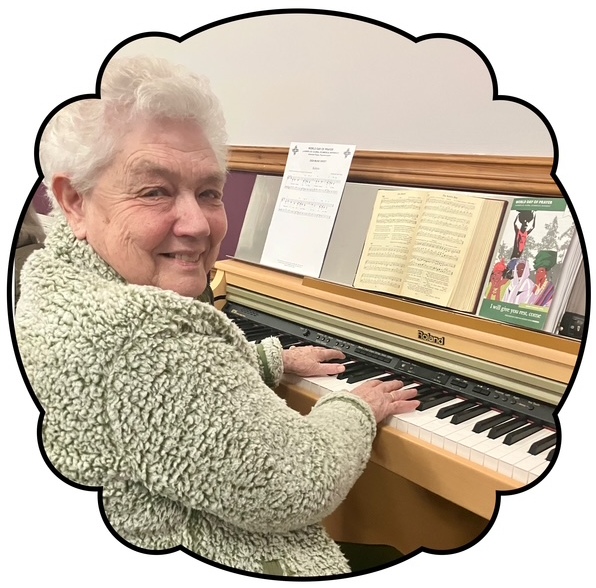
Personal stories, music – ranging from a traditional Igbo song to the mournful, familiar strains of, ‘The Day Thou Gavest, Lord is Ended’, and periods of shared prayer were interwoven throughout, generating an inspiring service for those present, calling all to unite as one people in both prayer and action.
“Come to me, all you who are weary and carrying heavy burdens, and I will give you rest. Take my yoke upon you and learn from me, for I am gentle and humble in heart, and you will find rest for your souls. For my yoke is easy, and my burden is light.”
(Matthew 11:28 – 30 NRSV)
In-keeping with all worship services across the Over Wyre Benefice, refreshments were served and fellowship shared at the conclusion of each one, before people headed out into the darkness, mulling over the open invitation: “I will give you rest, come.”